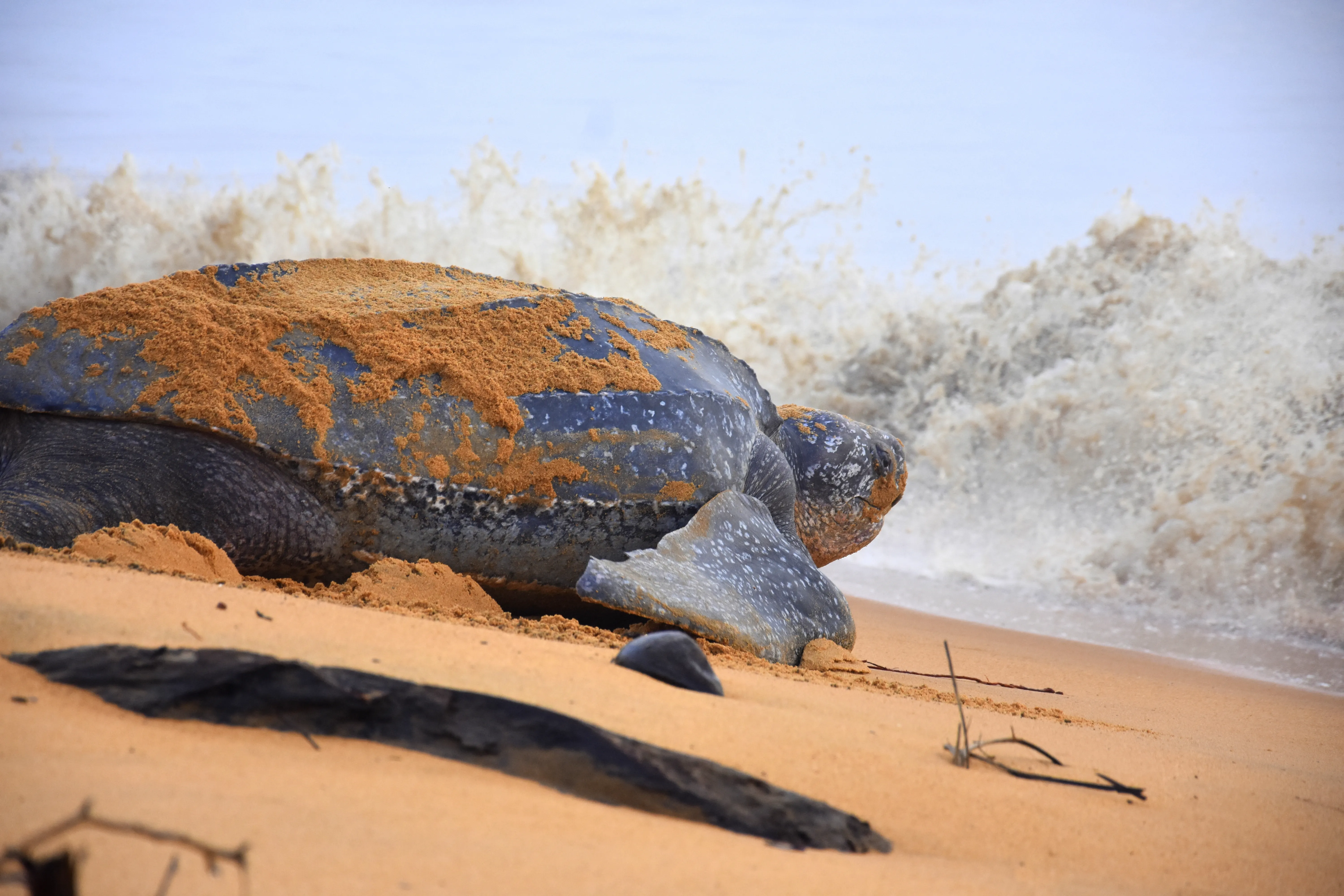
Assess the adaptive capacity of marine turtles to global changes and prioritize associated conservation efforts by recommending data collection methods.
Marine turtles face significant challenges from climate change and human activities across all habitats they use throughout their life cycle. The warming of the sand where they nest has a major impact on nest incubation success and the female-to-male ratio.
Beach quality depends on erosion dynamics, vegetation cover, coral reefs, and rising sea levels. At sea, environmental changes affect their food resources (jellyfish, seagrass, corals, etc.), altering the distances they must travel to meet their needs.
This working group focuses on characterizing the properties of nesting beaches and feeding areas to prioritize sites for protection. It also aims to better understand how turtles adapt to climate change.
The planned missions and studies will provide new insights into turtle population dynamics and their adaptive potential. Initiatives to protect feeding, reproductive, and nesting areas will be implemented to ensure population resilience.
Objective 1: Assess the quality of nesting sites
- Characterize beach properties to evaluate their suitability for nesting and the quality of incubation conditions for eggs
Objective 2: Assess the quality of feeding areas
- Anticipate changes in feeding strategies under the constraints of climate change
Objective 3: Evaluate population status and anticipate dynamics
- Obtain demographic, physiological, and genetic data to assess resilience
Objective 4: Assess the adaptive capacity of populations
- Identify populations likely to adapt through phenological changes Evaluate adaptive capacity through evolutionary changes
Objective 5: Assess the impact of underwater noise on individuals
- Study the auditory capacity of marine turtles and identify the sources of disruptive sounds