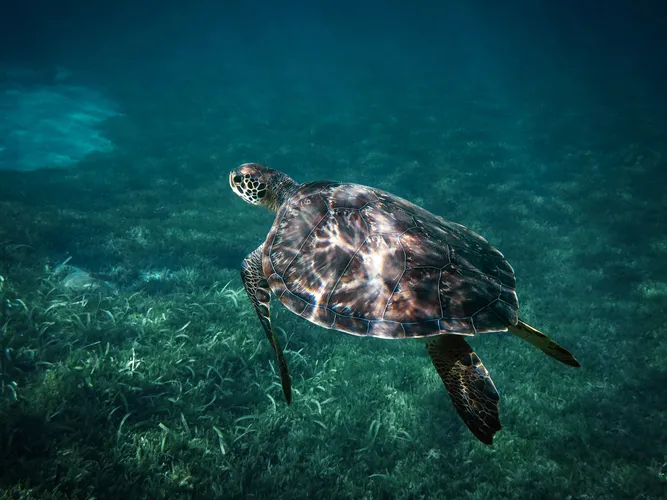
Study the population dynamics and behavior of marine turtles using appropriate identification techniques, while ensuring animal welfare.
Identifying individual turtles allows for monitoring populations and gaining a better understanding of them, which is essential for effective conservation. Several techniques are used. Historically, scientists around the world have relied on attaching metal tags or inserting electronic chips (transponders or PIT tags) into their flippers. Experts are now developing less invasive methods, such as photo-identification, that do not require handling the animals.
Experts have agreed on the need to define a methodology that ensures both the achievement of research objectives and adherence to animal ethics, and to provide guidance to voluntary stakeholders for its implementation. Workshops will be organized to strengthen skills and promote best practices, while the required equipment for French overseas territories will be inventoried and orders coordinated. One of the group’s main goals will also be to facilitate data centralization and promote data sharing.
Objective 1: Define a national strategy for individual identification
- Establish a national methodology to select identification techniques
- Provide training in identification techniques and associated best practices
Objective 2: Pool resources nationally to facilitate individual identification
- Coordinate equipment procurement at the national level
Objective 3: Facilitate sharing of individual identification data
- Secure and preserve data
- Develop network use to encourage data sharing