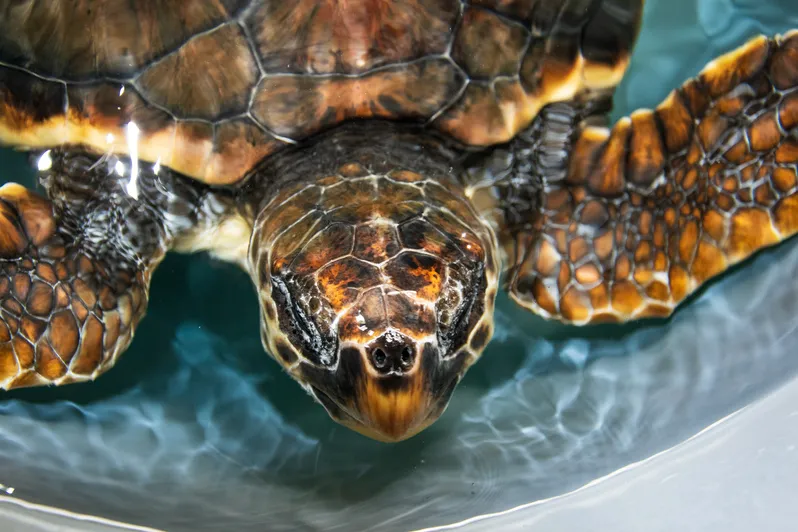
Improve the care of marine turtles in rehabilitation centers by developing an active network of veterinarians and caretakers.
Caring for injured turtles—including providing first aid, supporting their recovery, and ensuring they are released under suitable conditions—requires specialized skills, as does communicating and raising awareness about this care. Rehabilitation centers, at the forefront of marine turtle care, perform numerous essential tasks. They are central to observation and reporting networks for distressed animals, where effective communication is key. Through their patients, these centers contribute valuable data to scientific studies on turtle behavior and threats. They also offer engaging facilities for educational activities, helping the public understand the importance of protecting turtles and providing a unique connection with these sentinels of our oceans. All actions carried out by the “Pathology and Rehabilitation Centers” group are guided by a common goal: to enhance the care of marine turtles, from rescue to rehabilitation.
Objective 1: Structure technical exchanges among stakeholders and highlight the role of rehabilitation centers
- Develop collaborations to ensure effective care (from rescue to rehabilitation) for marine turtles by veterinarians and rehabilitation centers
- Provide technical support for establishing new rehabilitation centers and optimizing existing ones
- Position rehabilitation centers as key actors in marine turtle conservation
Objective 2: Improve the care of marine turtles
- Develop methods to assess pain and stress in marine turtles
- Identify reliable parameters to evaluate the health status of marine turtles
- Identify indicators to assess a turtle’s readiness for release into the wild